Open World Learning Lab
Open-source education design project

Turn the real world into a rigorous learning environment.

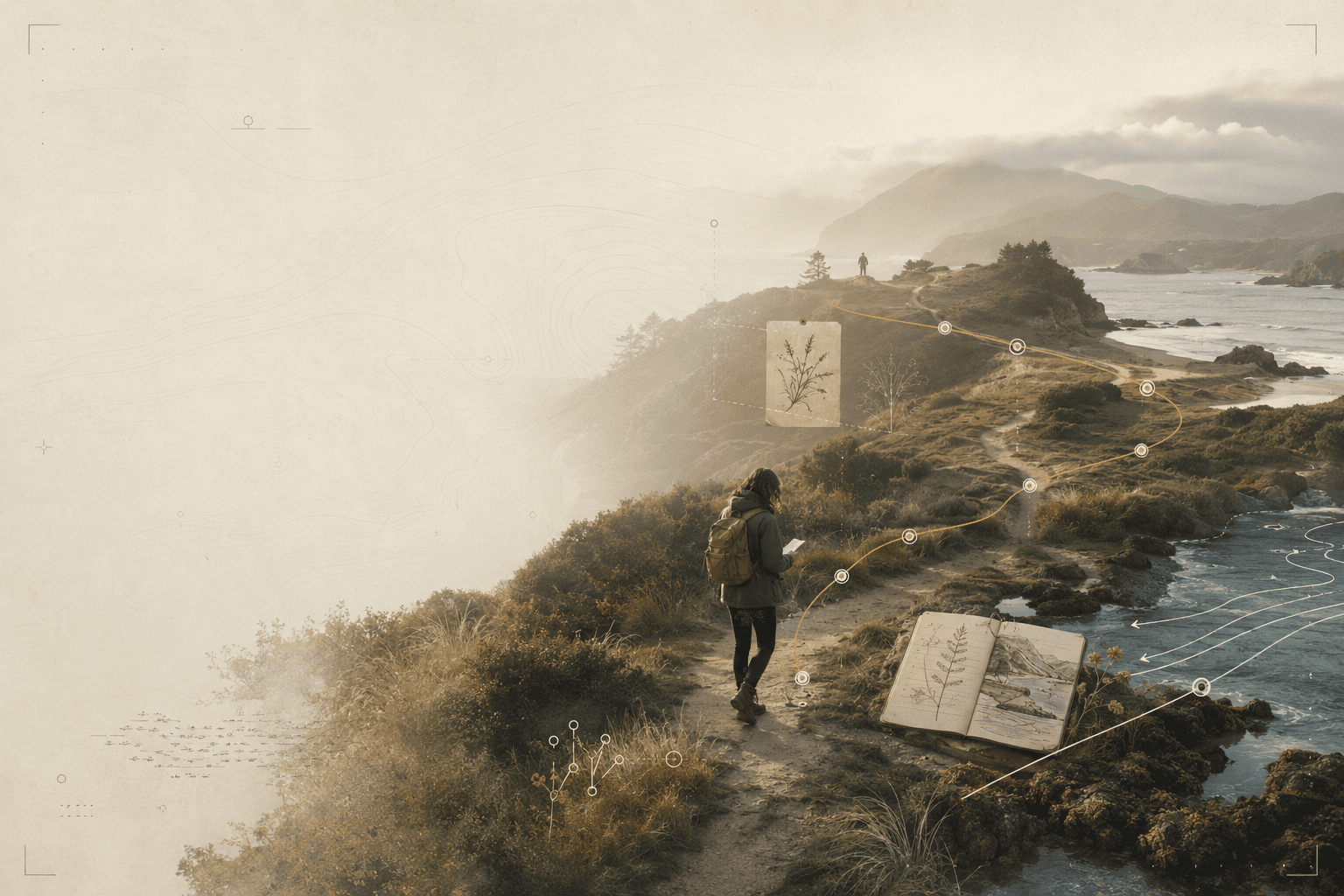
Open World Learning Lab is an open-source education design project exploring how place-based learning, human mentorship, AI glasses, live exploration, and thoughtful learning design can make knowledge feel alive again.

Not a metaverse school. A real-world academy model powered by emerging tools.

mission · active
OWL-001

Location

Tahoe

6,225 ft · clear · 42°F

Live

Mission

The Flip

Field observation

Rotation stalls at apex — torque and timing need review on replay.

Concepts

concept unlocked
MomentumTorqueRotationFeedback

Participants

Local explorers + global learners

Artifact

Field guide / reflection / analysis

artifact pending

Map legend

World as classroom

39.0968° N · 120.0324° W · Tahoe basin

Lake

zone 01

  • ecology
  • physics
  • policy

Mountain

zone 02

  • biomechanics
  • risk
  • feedback

Trail

zone 03

  • geology
  • navigation
  • attention

Campfire

zone 04

  • chemistry
  • story
  • civic conversation

The idea started in Tahoe.

I grew up in Tahoe, where I watched students on independent study spend their days skiing, riding, hiking, exploring, and learning from the world in ways school often did not know how to recognize.

When I was sixteen, I remember thinking about friends who did not seem to care about math in the classroom, but cared deeply about landing a flip. What if they could do the trick, return to the exact moment, study the angle, rotation, force, timing, and mechanics — and learn the math because it helped them become better at something real?

Maybe many students do not hate knowledge.
Maybe they hate knowledge removed from reality.

Open World Learning Lab begins from that insight.

Field note · origin

Maybe students do not hate knowledge. Maybe they hate knowledge removed from reality.

— Field note

Schooling and education are not the same thing.

Modern school systems often organize learning around schedules, subjects, rooms, assignments, and tests. Those structures can be useful, but they can also separate knowledge from the living contexts that make knowledge matter.

Open-world education starts from a different sequence:

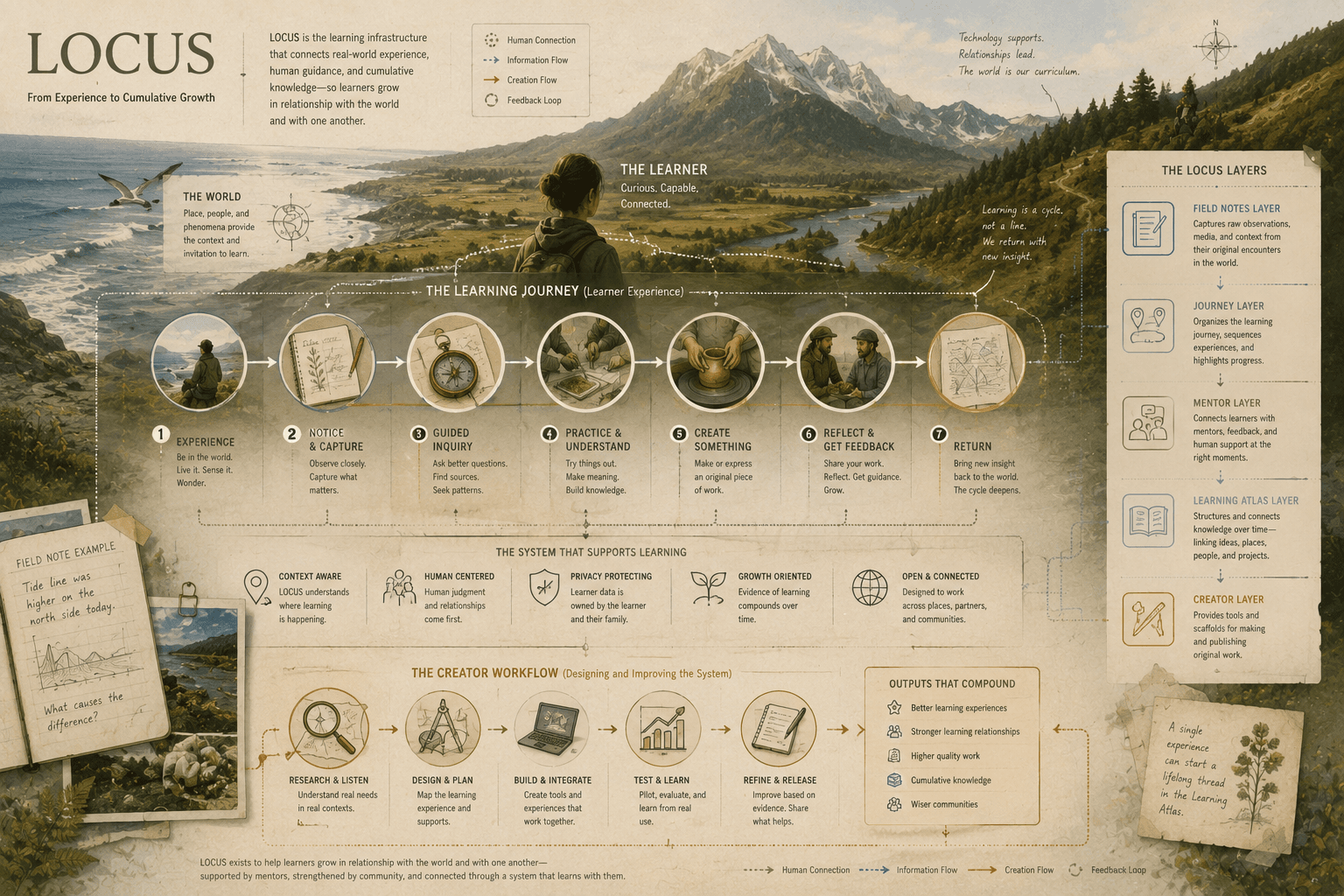
Experience → curiosity → guided inquiry → knowledge → practice → artifact → reflection

The goal is not to remove structure. The goal is to create structured freedom: rigorous learning pathways that begin in the real world and move toward deeper understanding.

1

Experience

Start in the real world

2

Curiosity spike

Something catches attention

3

Guided inquiry

Questions with support

4

Knowledge gain

Concepts take shape

5

Real-world practice

Apply and test

6

Public artifact

Show the learning

7

Reflection

Integrate and deepen

Meta Academy Tahoe: a first pilot concept.

A place-based, globally networked learning environment built around Tahoe as an open-world classroom.

Meta Academy Tahoe is a concept for using AI glasses, live translation, spatial media, educator-designed missions, and human mentorship to turn Tahoe into a rigorous learning environment that students around the world can enter, follow, question, and learn from.

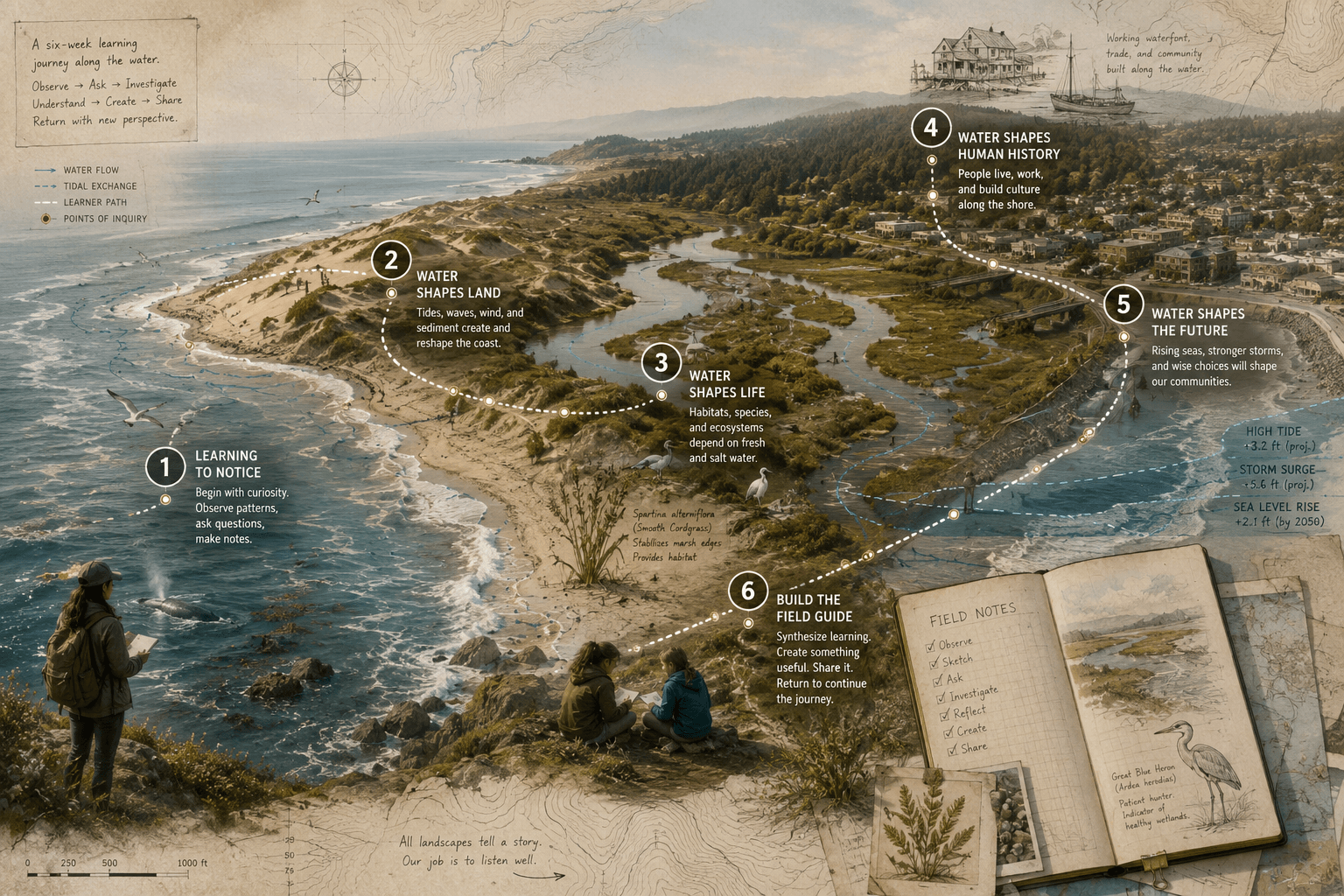
The lake becomes ecology, climate, physics, public policy, and stewardship.

A ski jump or wakeboard trick becomes momentum, torque, balance, timing, biomechanics, and feedback.

A trail becomes geology, navigation, land use, endurance, and attention.

A campfire becomes chemistry, anthropology, food, story, ritual, and civic conversation.

This is not about replacing teachers with AI or replacing the real world with screens. It is about using emerging tools to help students step deeper into reality.

Expedition map

Tahoe learning map

Status

Pilot concept

Mode

Place-based learning

Reach

Global stream

SCALE 1:48,000

FIELD SKETCH · v0

zone 01

Lake as System

  • Ecology
  • Climate
  • Physics
  • Public policy
  • Stewardship

zone 02

Mountain as Lab

  • Momentum
  • Torque
  • Biomechanics
  • Risk
  • Feedback

zone 03

Trail as Text

  • Geology
  • Navigation
  • Land use
  • Endurance
  • Attention

zone 04

Campfire as Seminar

  • Chemistry
  • Anthropology
  • Story
  • Ritual
  • Civic conversation

39.0968° N · 120.0324° W

Meta Academy Tahoe · concept pilot

How the model works.

module 01

Real places

Learning starts with actual environments: lakes, trails, neighborhoods, farms, museums, kitchens, workshops, and public spaces.

module 02

Explorer streams

Local learners and mentors document real expeditions so remote students can follow, ask questions, compare places, and join the inquiry.

module 03

AI scaffolding

AI can help translate, annotate, prompt questions, explain concepts, suggest next steps, and connect experience to disciplinary knowledge.

module 04

Human mentorship

Teachers, guides, coaches, elders, designers, and subject experts remain central. Technology supports the learning relationship; it does not replace it.

module 05

Public artifacts

Students create field guides, maps, videos, essays, datasets, debates, designs, and demonstrations that show what they learned.

The point is not more screen time. The point is better attention.

Sample learning missions.

Open-world learning needs structure. Missions turn exploration into rigorous inquiry, practice, and evidence of learning.

Mission briefOWL-M01

The Flip Mission

Students analyze a ski, snowboard, or wakeboard trick using video replay, body mechanics, physics, and reflection.

Concepts

forcerotationtorquetimingfeedbackrisk

Possible artifact

Annotated replay

reflection
Mission briefOWL-M02

The Lake as a Living System

Students investigate water clarity, invasive species, tourism, climate, land use, and local governance.

Concepts

ecologysystems thinkingpolicystewardshipdata

Possible artifact

Mini-documentary or dataset

reflection
Mission briefOWL-M03

The Trail Field Guide

Students hike a route and document geology, plant life, navigation decisions, human impact, and questions for further research.

Concepts

geologybotanymappingenduranceobservation

Possible artifact

Field guide or map

reflection
Mission briefOWL-M04

Fire, Food, and Civilization

Students gather around food and fire to study chemistry, anthropology, culture, ritual, conversation, and the history of shared meals.

Concepts

combustionfood systemsstoryethicscommunity

Possible artifact

Reflective essay or oral defense

reflection

The future has to be built carefully.

Open-world education could become deeply human, or it could become another layer of surveillance, distraction, and commercialization. The design matters.

Guardrail · 01

Reality first

Technology should deepen attention to the world, not pull learners away from it.

Guardrail · 02

Consent always

Recording, streaming, data use, and participation must be transparent and opt-in, especially with minors.

Guardrail · 03

Humans lead

AI can scaffold and support. Teachers, mentors, families, and communities guide the learning.

Guardrail · 04

Safety before spectacle

Outdoor learning requires serious risk management, preparation, supervision, and local knowledge.

Guardrail · 05

Local respect

Tahoe is not a theme park. Every place has history, community, ecology, and limits.

Guardrail · 06

Equity by design

Open-world education should not become luxury education for the already privileged. Access must be part of the model from the beginning.

An open-source design library for the future of education.

Open World Learning Lab is being designed as a public resource: a place to publish frameworks, white papers, sample missions, field guides, ethical guardrails, and pilot blueprints that educators, designers, technologists, families, and communities can study, remix, critique, and improve.

On this site (v0)

The following are already represented in the sections below.

Downloadable releases (next)

Standalone documents and templates will be published here as they are finalized.

  • Manifesto (full document)
  • One-page concept brief
  • Future white paper
  • Downloadable mission template packs
  • Field guide and reflection templates
  • Meta Academy Tahoe pilot blueprints

Unless otherwise noted, project writing and educational design materials are intended to be shared under Creative Commons Attribution 4.0. Code resources may be released separately under an MIT-style license.

Briefs, templates, and blueprints will be available for download as the library matures. This page is the first public sketch.

The future of education should not feel like escaping reality.

It should feel like finally seeing reality clearly.

This is a v0 public concept site. The framework, missions, and white papers are in development.